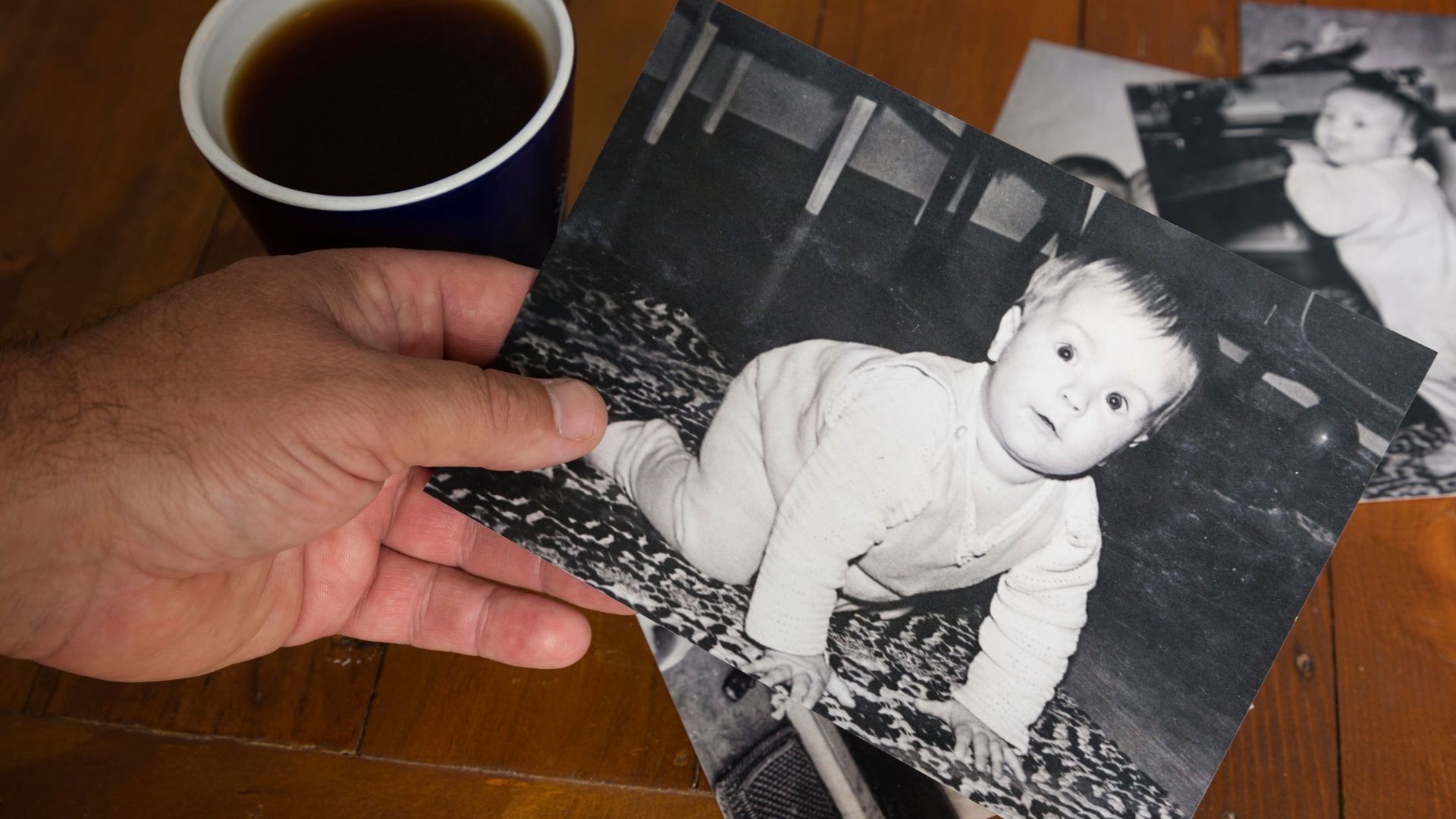
You stand before someone you met last week, smiling politely, while your mind completely erases their name as if it never existed. A familiar scene, isn't it? Intelligence has absolutely nothing to do with it. This is a mental translation glitch, nothing more. Yet many suffer from it in daily situations that leave them feeling embarrassed in front of colleagues, clients, and friends. The problem is that your brain is wired to make remembering faces easy and handling names difficult by nature. But what if there were simple methods you could apply immediately to turn those abstract names into unforgettable images?
Why Does Your Brain Remember Faces but Forget Names?
The reason is stranger than you think. Your brain processes faces as complete visual images in an instant, through a specialized region called the fusiform face area, which operates automatically without any conscious effort from you. You recognize a face automatically, just as you recognize a banana you've seen a thousand times before. Names, however, are merely abstract words that carry no mental image and no attached visual meaning, so your brain is forced to actively retrieve them from memory stores. This retrieval is fragile and collapses quickly at the first moment of stress or distraction.
There is a famous experiment in psychology called the baker paradox. Imagine someone told you that a man works as a baker, then in another situation told you that another man's family name is Baker. The sound is identical, but you will remember the profession easily because it evokes clear images of bread, an oven, and the visual scene, while you will forget the name because it connects to no real image in your mind. This is exactly the problem: names are by nature devoid of visual meaning, and your brain needs a visual bridge to connect them to a real person standing before you.

The Visual Linking Strategy: Step by Step
The solution is simpler than you imagine if you understand the principle. You must turn the abstract name into something you can see with your own eyes, then anchor it to the person's face in an unforgettable way. How do you do that?
Step One: Choose distinctive features in the person's face during the first three seconds of acquaintance. Thick eyebrows, a unique eye color, distinctive glasses, or a special smile. Don't strain your eyes; a quick scan is enough.
Step Two: Turn the name into a tangible image. If the person's name is Fahd, imagine the leopard clearly. If the name is Samir, imagine a clear sky filling the horizon. The idea is to give the abstract name a visual body that your brain can hold onto.
Step Three: Combine the two images together in a strange or funny way. Think of a leopard sitting on top of the person's eyebrows, or a clear sky shining from behind their eyes. The stranger the image, the deeper it embeds in your memory. Important tip: after choosing the distinctive features, show natural interest in the conversation and maintain normal eye contact so you don't appear to be staring at the person's face in an exaggerated way.
Daily Exercises to Strengthen Your Visual Memory
Your visual memory is a muscle, and strengthening it requires regular practice like any other muscle in your body. Try what is known as the mental camera exercise: look at a room or a picture for only ten seconds, then close your eyes and try to count every detail you saw: the colors, the shapes, the positions. This exercise strengthens your ability to record visual details quickly, which is the very same skill you need when meeting new people.
Another useful exercise is the mental caricature exercise: when observing people's faces in public places or when browsing professional networking profiles, choose one feature for each face and imagine it exaggerated as if it were a caricature drawing. This exercise pushes your brain to focus on unique features instead of processing the face as a general image without distinctive details. Don't forget: general brain training games like puzzles and rapid recall don't necessarily improve remembering faces and names, because they teach you specific skills that don't transfer to daily life. What you actually need are exercises that focus specifically on facial features.

What to Do When Your Memory Fails You?
Despite all exercises and techniques, there will be moments when memory fails completely. The name is on the tip of your tongue but won't come out. No need for panic or embarrassment. The key is to save face gracefully, and the best way to do that is to admit forgetfulness with courage, not shame. You can say something like: "I apologize, my memory failed me with the name, but your kind features and our past meeting are impossible to forget. Remind me of your gracious name?" With this phrase, you acknowledge the forgetfulness clearly but compensate by remembering positive details from the previous encounter, which preserves your social standing and removes any embarrassment.
Practical Tips for Immediate Application:
Repeat the person's name out loud immediately upon hearing it: "Pleased to meet you, Ahmed." This gives your brain three extra seconds to build the visual link while you engage in conversation in a natural way.
If you are a quiet person by nature, exploit your ability for deep observation. Listen attentively and support that with slow gestures, and at the same time build your mental image calmly.
Don't worry if the technique doesn't work the first time. Practice is what separates the first attempt from the stable habit that ignites confidence.
Remember that memory is not a fixed talent but a muscle that is trained and grows through persistence. What you learned here—linking names to features, the mental camera exercise, and the mental caricature technique—is only an enjoyable beginning to a journey of transforming your mind into a living visual canvas where every face and name is stored with precision and confidence. Every name you successfully memorize is a small victory that gradually boosts your self-confidence, and makes every upcoming acquaintance situation more comfortable and less stressful.
To boost your attention and calmness before important acquaintance situations, try the Mawj app and listen to the focus channel designed to prepare your mind for the highest degree of productive attention and inner calm. Sound designed carefully to enhance your attention and mental focus based on EEG and fMRI research. Download the app today and start your journey toward a stronger memory and deeper confidence.
This article is intended for educational and informational purposes only and is not considered a substitute for specialized medical or psychological consultation. Please always consult professionals when needed.