
Sometimes, a person wakes up to find their neck as tight as a rope. Or their jaw unconsciously grinding their teeth. Or a mild headache fluttering above their eyes since morning. We ignore it. We have our coffee. We move on. But the body never lies; rather, it speaks a language of pain, tension, and tingling. When someone asks themselves how to understand their body's language, or feels that their body is exhausted from sadness, they approach a crucial gateway: the gateway of body awareness, which connects what we feel internally with what our body suffers externally. In this article, we walk together on a simple yet profound journey, a journey where we learn how to listen to our bodies instead of fighting them, and how to transform pain from an unknown enemy into a message whispering our inner secrets.
The Body's Forgotten Language: When the Mind Speaks Through Muscles
Tension does not remain confined to the head. It creeps in. It slips through the mind-body connection, that invisible bridge that transmits repressed emotions to the limbs. When a person feels chronic distress, their body may ignore internal safety signals, or interpret normal sensations as threats, responding with defensive muscle tension: the neck rises, the shoulders contract, the jaw stiffens. These are not mechanical malfunctions, but rather protective boundaries, reactions that shield you from anticipated harm. A clenched jaw, for example, often reflects words left unsaid, anger swallowed, boundaries erased by a polite smile. Meanwhile, shoulders raised like a shield indicate a constant readiness to flee or fight, as if the body is saying: I am not safe yet.

The Tension Knot: Headaches and a Locked Jaw
The causes of tension headaches are not always in the eyes or from staring at a screen, but rather in the way we think about stressors. That circular pressure around the forehead is often the result of internal sensitivity where the brain amplifies normal signals and turns them into a painful alarm, especially when we continue non-stop worrisome thinking. Similarly, jaw clenching due to stress, which occurs at night or during difficult meetings, is not just a bad habit, but a body trying to protect you from a situation where you feel unable to express yourself. The muscles become psychosomatic knots, places where the body stores what the mind refused to process.
Judgment-Free Body Scanning: Body Scan Meditation
Before you ask your body about its messages, you must see it. Truly. Body scan meditation here is not a complex spiritual ritual, but a simple exercise in internal awareness. Lie down or sit, close your eyes, breathe slowly, and move your attention from the tips of your toes to the top of your head, but without ordering the muscles to relax; just observe. Describe the sensation: Is it warm? Does it feel like a prominent belt or a heavy mass? Accept it. Tell yourself: This is a sensation, not necessarily a threat. Techniques for releasing physical tension begin with a single step: looking with curiosity, not fear, as if you are meeting an old friend you haven't seen in a long time.
Self-Dialogue with the Body: How Do I Dialogue with My Body to Feel Relieved?
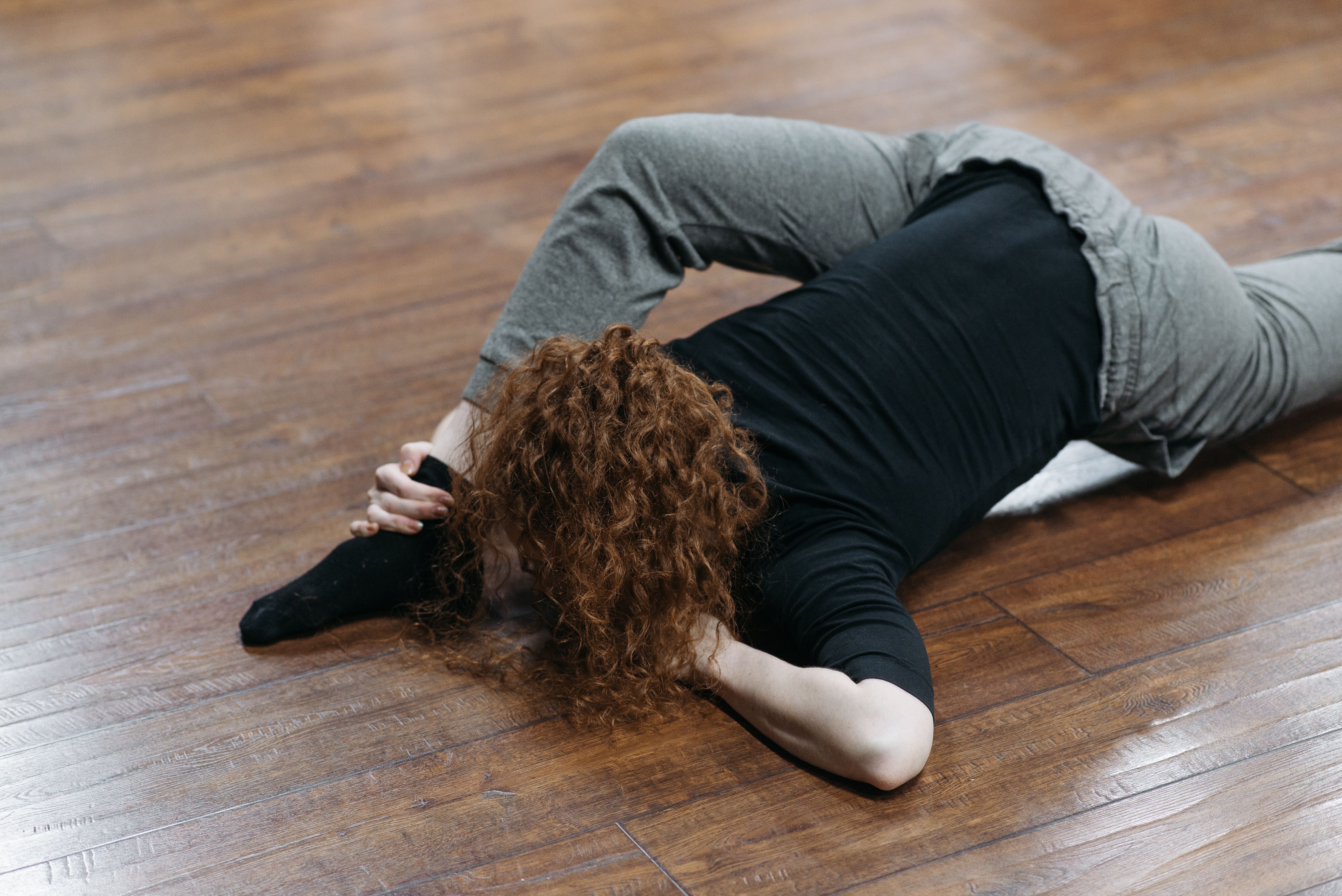
Here we are at the heart of the matter. How to listen to my body's messages? The question seems strange, but the answer is practical. Choose the knot you discovered: the clenched jaw, the aching forehead, the raised shoulder. Place your hand on it gently. Ask it in a quiet internal voice: What are you trying to protect me from right now? Then ask: What anxiety is preventing you from loosening up? Wait. A voice, an image, a memory, or just a sensation might come to you. Do not judge. Do not rush. Then ask: What boundaries did I cross before you appeared? And where in my life do I say yes when I want to say no? This self-dialogue with the body transforms you from someone who suffers from pain to someone who understands its messages, restoring true body awareness.
Practical Tips:
Practical tips for daily listening: Start with five minutes daily of simple body scanning. Write down what you discover in a small notebook: Today, my right shoulder is carrying a meeting I didn't enjoy. When you feel a headache, pause for a few seconds and ask yourself: What just happened? Use deep breathing as a bridge to return to the body. And when you find the answer, do not just stop at thinking, but change something small in your day: a gentle refusal, a short break, a walk without a phone. The physical symptoms of psychological stress subside when we respond to them with action, not by ignoring them.
Your body is not a machine that requires fixing, but rather a companion that brings you news about your interior. Every headache, every muscle tightness, every locked jaw is an invitation to stop and listen. The skill does not lie in eliminating the pain, but in understanding its language. Over time, this internal conversation becomes a beautiful daily habit, a habit that restores your sense of safety within yourself.
Do you want a companion to help you on this journey? Try the emotional recovery channels on the Mawj app, featuring audio sessions based on scientific research that help you calm your nerves and restore internal balance. Download the Mawj app now, and start your first real dialogue with your body.
This article is intended for educational and informational purposes only and is not considered a substitute for specialized medical or psychological consultation. Please always consult professionals when needed.