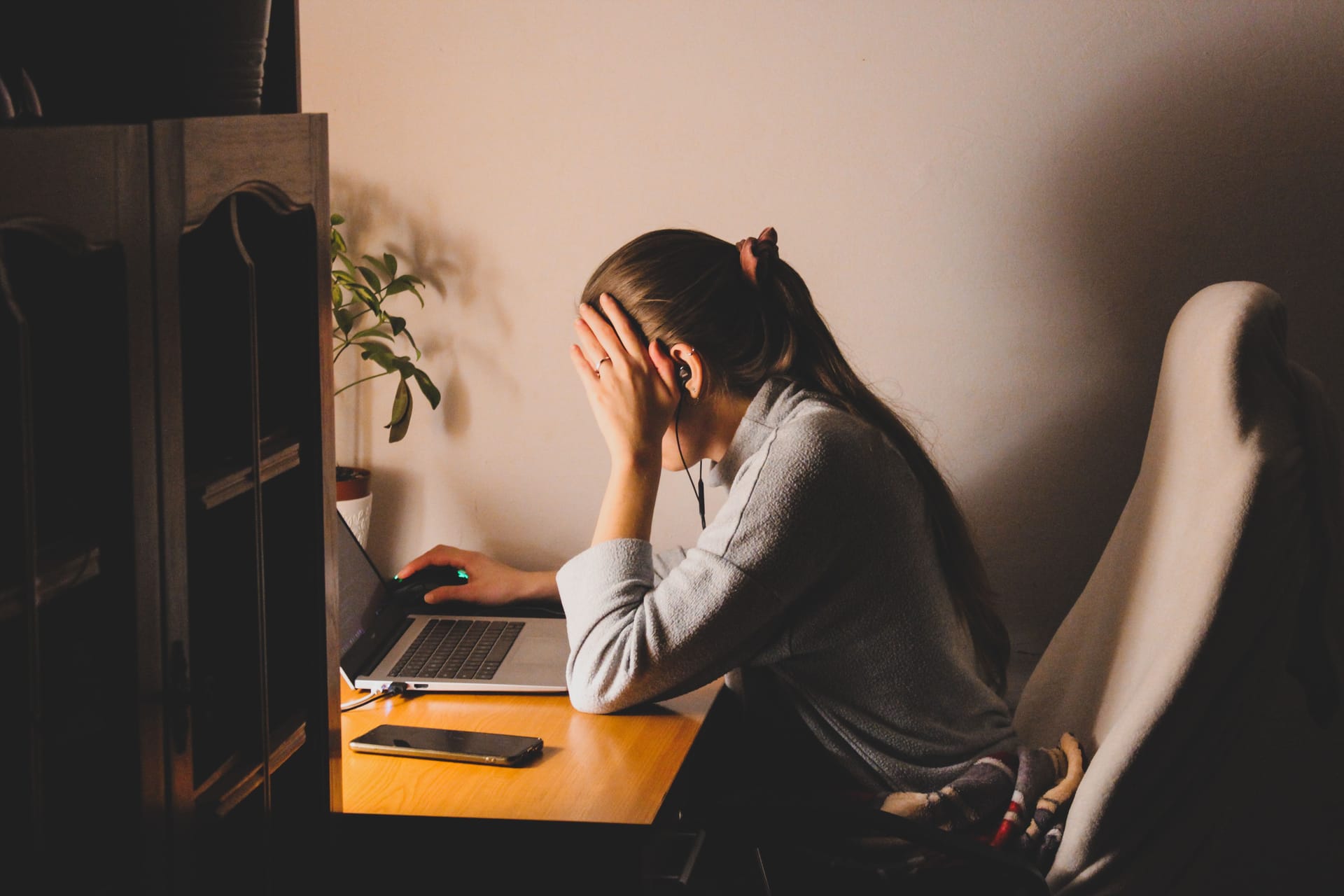
Remote work changed everything. The daily commute disappeared. Those spontaneous coffee-machine chats with coworkers faded away. Suddenly, we found ourselves working from living rooms, joining meetings from sofas, and blending work hours with personal life in ways we had never experienced before.
This shift brings real comfort. But it also carries psychological challenges that build up quietly. Home isolation is not just boredom; it is a persistent cognitive load that can surface as exhaustion, difficulty concentrating, and a sense of disconnection. Many remote workers feel they are working harder yet achieving less, while their energy drains faster than ever.
In this guide, we explore remote work mental health tips grounded in reliable scientific evidence. We will not offer magic fixes. Instead, we provide a deeper understanding of what is happening inside us, plus practical tools you can apply today to restore balance. Because working from home should never cost you your mental health.
What Does Remote Work Do to Your Mental Health?
When the physical boundary between office and home vanishes, limits begin to dissolve. There is no desk to leave at five o'clock, no colleagues to share a smile with in the hallway. Without spatial and temporal boundaries, the environment becomes a breeding ground for chronic stress. Work seeps into every corner of your home and every hour of your day.
The numbers tell a clear story. A comprehensive systematic review found that 38.8% of remote workers suffer from general psychological issues, 28.4% experience high stress, anxiety affects 23%, and depressive symptoms appear in 22.6%. Most alarmingly, 56.4% report poor sleep quality. These are not just statistics. They reflect what happens when remote work lacks social and structural infrastructure.
Research also reveals subtle differences. Men working remotely tend to show higher anxiety rates, while women display more pronounced depressive symptoms. Unmarried employees and those without children face greater loneliness and psychological pressure. At the heart of it all, emotional dysregulation and isolation emerge as the main drivers of stress and anxiety in remote work settings.

Burnout: When Stress Crosses the Line
Working continuously without clear breaks does not only lead to physical fatigue. It leads to what we call burnout. This is not a passing tiredness that a long sleep can fix. It is a deep experience of exhaustion paired with lost motivation and a feeling of detachment from your job. In a remote environment, these warning signs are harder to spot because we miss the social cues that once helped us notice mood shifts back at the office.
Why Is Home Isolation Harder Than We Expect?
We tend to underestimate how tough working from home can be. We assume that skipping the daily commute means extra hours of rest, and that the quiet home will boost focus. The reality is far more complex. In a traditional office, impromptu meetings and quick desk-side chats served as natural social breaks that relieved pressure and recharged energy.
When we move to remote work, we lose the physical and social transitions that once structured our day. There is no walk to the conference room, no coffee break with a colleague. Digital communication tools become always-on and unstructured, creating a state of constant mental activation. A large-scale study published in a science journal and covering 590,000 workers showed that remote employees spend more time alone during work hours and are less likely to socialize after the workday ends.
This loss of interaction is not easily replaced. Instead of being a sanctuary for relaxation, home turns into an extended workspace. The result is role blurring, where work triggers remain present everywhere. This accelerates mental exhaustion and weakens your ability to recover.
Home Isolation and Mental Health: The Difference Between Loneliness and Solitude
Isolation is not simply the absence of people. It is the absence of quality connection. You can be surrounded by family at home and still feel lonely. In the context of remote work, loneliness shifts from an emotional feeling into a cognitive stressor that weakens motivation and reduces performance. When the brain lacks social reinforcement, it registers that as a sharp deficit and triggers a cascade of neurological and emotional responses.

Work-Life Balance: Boundaries That Protect Your Mind
Boundaries are not walls. They are essential protective mechanisms for the mind. When we fail to set clear limits between work and life at home, professional time expands like a tide, swallowing evening hours and ruining sleep quality. Research shows that remote workers put in an average of 48.5 extra minutes per day because of asynchronous digital communication.
But boundaries are not only about time. They are also about place, relationships, and cognitive habits. Creating a dedicated workspace, even a small corner in the living room, helps the brain associate that spot with professional focus only. When work hours end, shutting the laptop or stepping away from that corner becomes a clear neural signal that the professional role is over and the time for relaxation and recovery has begun.
Most importantly, agree with family members or housemates about your availability and your need for uninterrupted focus. These relational agreements reduce daily friction and give you a sense of control over your environment. And control, as studies show, is the most important factor in reducing emotional exhaustion and preserving mental energy.
Building a Routine While Working from Home: Structure That Saves Your Day
Routine is not a restriction. It is a cognitive scaffold that stabilizes the nervous system and reduces decision fatigue. When your day has a clear structure, you do not waste mental energy on small, repeated decisions. The day starts cleanly, moves smoothly between work blocks and breaks, and ends at a defined point.
Research indicates that a consistent daily routine acts as a cognitive support that protects the nervous system from decision-making fatigue. In a study conducted at Orange Jordan Telecom, a remote work strategy explained roughly 79% of the variance in employee quality of life when combined with supportive work environments and psychological safety initiatives.

Practical Tips You Can Apply Today
Long-term protection requires simple but effective daily habits. This is not a theoretical list. These are exercises you can start right now.
Now that we understand what is happening, it is time for practical tools. These tips are not abstract theories. They are simple steps that can make a noticeable difference in your day.
Set Fixed Start and End Times
Remote work has a way of spreading. Without clear hours, it will keep creeping into your evening. Set a start time and an end time, and guard them as fiercely as you would an important appointment.
Build a Morning Routine
Before you open your laptop, do something that mentally shifts you into work mode. A short walk around the house, a few minutes of reading, or jotting down your goals for the day. This "fake commute" signals to your brain that it is time to work.
Take Real Breaks Away from Your Desk
Every 30 minutes, stand up for two or three minutes. Every 50 minutes, take a five-minute movement break. Evidence shows these pauses lower heart rate, ease muscle tension, and fight cognitive strain.
Maintain Genuine Connection with Others
Message your colleagues, but voice or video calls are even better. High-quality synchronous communication delivers stronger social nourishment than text messages and reduces emotional fatigue.
Separate Your Workspace from Your Living Space
Even if your desk is just a small corner, keep it work-only. When you are done, close the laptop and leave that corner. Your brain needs clear spatial cues.
Turn Off Non-Essential Notifications
Switch off unnecessary work alerts after hours. Constant digital connectivity keeps your nervous system on high alert and blocks the transition into relaxation.
Move Your Body Throughout the Day
Movement is not a luxury. A massive analysis of more than one million people showed that 60 to 75 minutes of moderate daily physical activity completely cancels out the risks of prolonged sitting.
Protect Your Sleep and Downtime
Create an evening shutdown ritual. Review what you accomplished, plan for tomorrow, then close the device. Good sleep is your first line of defense against daily stress buildup.
Remote work is not the enemy of your mental health. It is simply a new pattern that asks us to be more aware, more stubborn about protecting our boundaries, and kinder to ourselves. Balance does not come from one radical change. It comes from the accumulation of small decisions we make every day. A decision to set a specific work time. A decision to take a real break. A decision to connect with another human being using a real voice.
You deserve a home that feels like a sanctuary, not a professional battleground. With a little organization and a lot of self-compassion, remote work can become a space where productivity and comfort coexist.
If you are looking for extra support to regulate your mental and emotional state while working remotely, try the Mawj app. Mawj uses audio neurofeedback technology built on EEG and fMRI research to help you reach states of relaxation and focus. Try the Emotional Recovery channel, which clinical trials showed helped 87.5% of participants reach deep relaxation and fall asleep in under 10 minutes, with a lasting sense of emotional safety and inner stability. Download the app now and make it part of your daily routine to maintain your mental balance.
This article is intended for educational and informational purposes only and is not considered a substitute for specialized medical or psychological consultation. Please always consult professionals when needed.