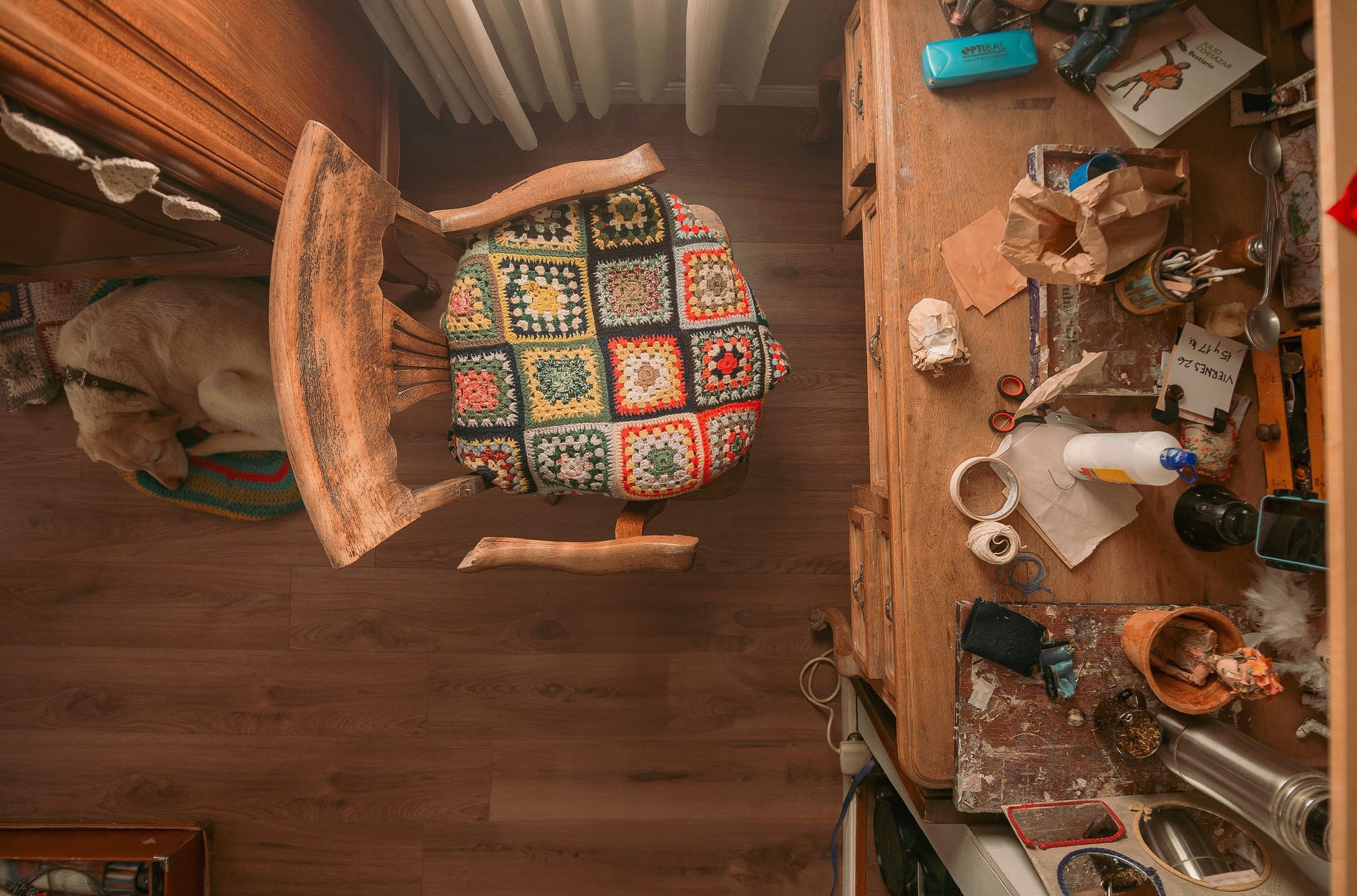
A phrase typed into search engines again and again, as if it were a secret never spoken aloud. And this phrase, written in a tone of despair and searching alike, reopens an old question: why does our home sometimes hurt us in silence? We enter the room. We see books on the floor, clothes slowly climbing the chair as if asking for help, and papers whispering that there is unfinished work. So we close the door. We assume the problem is laziness, or that we were not born organized. We think tidying is a talent, when in truth it is a language the body learns through repetition, not birth.
But the truth runs deeper. Your home is not merely walls that shelter the body; it is a living extension of what is happening inside you. And when this extension loses its grace, the heart also loses its gateway to peace. In the psychology of household clutter, the home is not viewed as just a place, but as a mirror reflecting the fog that may inhabit the mind sometimes without permission, so external clutter becomes an echo of internal chaos, and an echo that reverberates.
The Eye Sees, and the Body Pays the Price
Clutter is not merely scattered objects. It is visual noise screaming at the brain. Every item the eye sees out of place sends a signal inward that there is a pending task. And when these signals multiply in the corners of the room, on top of the refrigerator, and under the table, the mind becomes like someone trying to hear a whisper in the middle of a storm. It loses patience. Its shoulders grow tired. And the body remains in a hidden state of alert until evening, so sleep does not come quickly, and peace never comes at all. The body, throughout the day, maintains a light tension as if preparing to escape from a room where there is no longer any place to sit.
This is the essence of the psychological effects of clutter: the eye steals energy from the mind without our realizing it, and we keep searching for a reason for our exhaustion without looking at what surrounds us. Therefore, when we feel tired without a clear cause, the home deserves to be the first place we investigate, not the last.
The Exhausting Cycle: Between Clutter and Helplessness
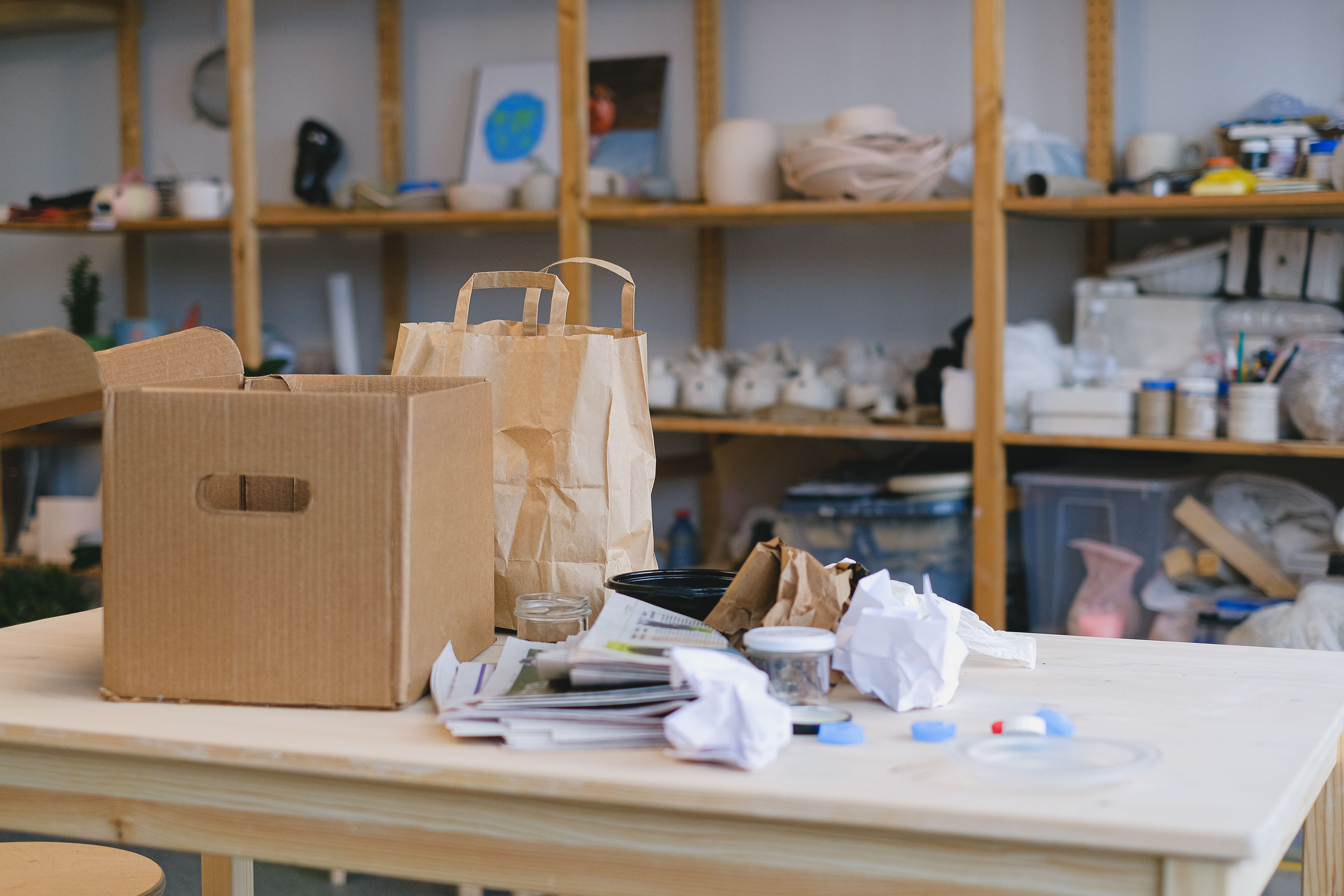
Clutter is rarely the beginning of the story. Sometimes it is the end of a heavy day, or a week in which the body lost its momentum, or a period in which simply lifting the lid off a bucket becomes the hardest task in existence.
When dust accumulates on the tables, a vague feeling of inadequacy accumulates with it. Throwing away a single piece of paper becomes a heavy decision, as if we were throwing away part of our memory, so we hold onto the old shirt because it witnessed a moment, and the book we never read because we might read it someday, and the empty box because we fear regret. The mind prefers sitting on the edge of the couch and staring at emptiness rather than confronting this weight. So the clutter grows, and the psychological pressure grows with it, until the chaotic home and mental pressure become two sides of the same coin that cannot be separated. And as one increases, so does the other, in a closed circle that suffocates the soul.
Why Does Organizing Make Us Feel Lighter?
When we return everything to its place, we do not merely clean the house; we redraw the boundaries of the inner world. An organized home and inner peace are twins. Suddenly, the eye can rest on a clean horizontal line. Breathing becomes deeper. Evening arrives carried on a comfort undisturbed by piles whispering the names of unfinished tasks. Here lie the psychological benefits of home organization: not in transforming into a magazine-cover house, but in reclaiming a simple feeling called "I am here, and I am okay." And when night falls, the brain finds a room that does not compete with it for attention, so it surrenders to sleep without dispute. It is a moment when the inner screaming stops, and the body becomes light, as if stones have been lifted from its chest.
Decluttering Tips for Anxiety: Start from the Corner, Not the World
How to organize my home for mental health without collapsing halfway through? The secret lies in small beginnings. Just five minutes: set a timer. Organize one shelf. Small victories breed big victories, and the mind needs an accomplishment it can see, not a plan that exhausts it. Start with the bathroom, or the stairs, or the corner of the desk that faces you every morning.
Look before you touch: Before picking up anything, stand back. Survey the room with your eyes. Touch magnifies the emotional value of things, so let decisions be visual first; the eye judges with more logic than the hand tied to memory.
Thank, then release: In that Japanese system of organizing, it is said to thank the item before saying goodbye. This simple gesture transforms loss into the closing of a door, not a wound, so letting go of something becomes a celebration of it, not a denial.
Your home is not required to be a flawless work of art. It is required to be the only place where you can drop your shoulders and say: I am safe. Take one step today, and let tomorrow carry the rest of the path. The clutter was not built in a single day, and it will not be removed in a single day, but every item you return to its place, you also return a piece of your calm, and a piece of yourself. Trust in slowness. Slowness is not a flaw; it is the path back to yourself.
Are you searching for deeper peace that completes what you started at home? Try the Emotional Healing channel on the Mawj app, where guided voices help you restore inner balance after a day of organizing and reflection.
This article is intended for educational and informational purposes only and is not considered a substitute for specialized medical or psychological consultation. Please always consult professionals when needed.