Working in sealed offices has become an unavoidable daily reality. Stagnant air, constant air conditioning, and artificial lighting exhaust both mind and body. Have you ever felt a fog clouding your focus? A mild headache that lingers after long work hours? Perhaps you have noticed some days you are simply less productive with no clear reason. This feeling is not fleeting, and it should not be ignored.
Modern scientific research confirms that indoor work environments directly affect our cognitive performance and psychological comfort. Fortunately, the solution is closer than you think and far simpler than buying expensive equipment. Indoor plants are not just beautiful decorations that add a green touch to corners. They are natural, effective tools that support air purification in your personal zone, improve concentration, and reduce stress. In this comprehensive guide, we review the best types for low-light spaces, aromatic plants that awaken the mind, and safe options for pets, along with practical buying and care tips for Jordan and the Levant.
Why Do You Need Air-Purifying Plants in the Office?
Conversations about office plants usually begin with NASA's historic 1989 study. Led by Dr. B. C. Wolverton, the study proved that common indoor plants can remove up to 90% of volatile organic compounds such as benzene, formaldehyde, xylene, and toluene in completely sealed rooms. This process happens through the plant absorbing gaseous pollutants through leaf stomata, then converting them into harmless organic compounds, while soil microorganisms break down toxins. But the practical reality is slightly more complex than what laboratories show.
Researchers at Drexel University, Dr. Michael Waring and Bryan Cummings, re-evaluated this data through a comprehensive analysis of 196 experiments over thirty years. They found that the clean air delivery rate per individual plant is extremely small. To match the efficiency of a standard central air-conditioning system or even two open windows, you would need between 10 and 1,000 plants per square meter of office space. That number is practically impossible. But do not despair. Plants may not purify air across an entire building, but they do improve air quality in the "personal breathing zone" around your desk. A three-month field study in the United Kingdom and the Netherlands (Nieuwenhuis et al., 2014) showed a significant 15% increase in productivity when plants were added to previously bare offices, alongside noticeable improvements in job satisfaction and self-reported focus.
Best Low-Light Office Plants for Air Purification
Natural light is a blessing not every office enjoys. Fortunately, some plants thrive in dim light and deliver real benefits.
ZZ Plant (Zamioculcas zamiifolia) - Shines with glossy, waxy leaves and adapts easily to low light. It only needs watering when the top layer of soil dries out, thanks to its water-storing rhizome roots.
Devil's Ivy (Epipremnum aureum) - Fast-growing and tolerates artificial and fluorescent lighting. Laboratory studies have demonstrated its ability to absorb formaldehyde and benzene.
Snake Plant (Dracaena trifasciata) - Handles drought and air conditioning with ease. It operates through crassulacean acid metabolism (CAM) to absorb carbon dioxide and release oxygen during nighttime hours.
Cast Iron Plant (Aspidistra elatior) - Slow-growing yet extremely tough. It suits completely enclosed spaces and coexists with thermal fluctuations and dust.
How Many Plants Do You Actually Need?
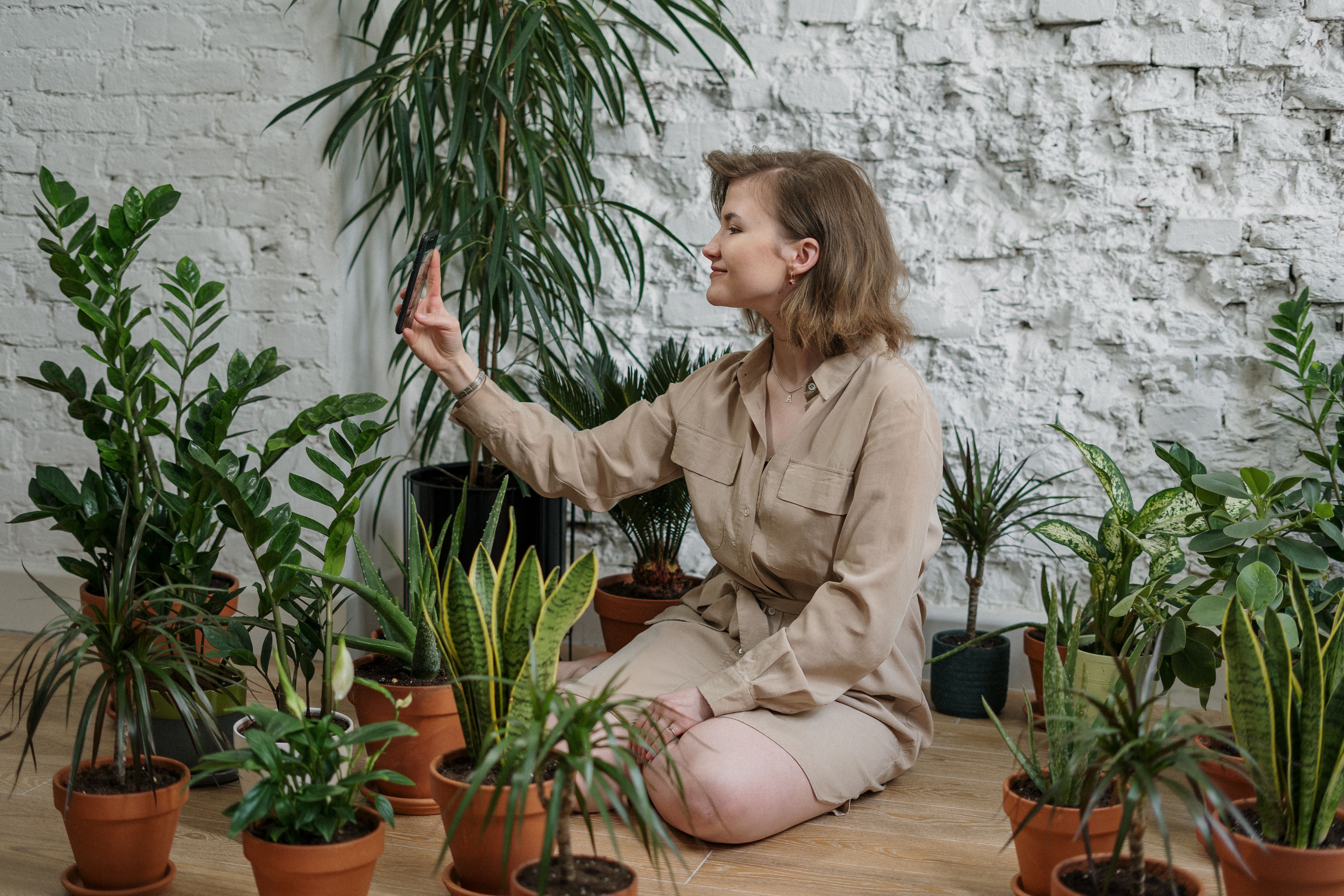
A practical question that comes up often. For a ten-square-meter office space, two to three medium-sized plants are sufficient. The golden rule: one medium plant per 3 to 4 square meters. This density improves local relative humidity, reduces dust, and creates a supportive visual environment around your desk. Do not try to turn your office into a tropical rainforest. Balance is the key.
Plants That Improve Focus and Productivity
The psychological benefits of plants are no less important than the physical ones. According to Attention Restoration Theory developed by psychologists Stephen and Rachel Kaplan, modern office tasks demand sustained directed attention that fatigues the brain and causes cognitive exhaustion. Plants provide "soft fascination" that rests directed attention and recharges it effortlessly. EEG studies have shown that looking at real plants increases theta waves in the occipital lobes, indicating physical relaxation and better focus, while also reducing diastolic blood pressure and stabilizing heart rate.
Aromatic Plants for Better Focus
Scents are not a secondary luxury. Rosemary contains the compound 1,8-cineole, which crosses the blood-brain barrier easily and inhibits acetylcholinesterase enzyme, thereby increasing acetylcholine levels linked to memory and attention. A Northumbria University study (2012) showed a direct positive relationship between the concentration of this compound in the blood and the speed of cognitive response in serial subtraction tasks.
Jasmine acts as a stimulant for the central nervous system. EEG recordings showed a significant increase in beta waves upon inhaling jasmine oil, meaning a more active, alert mental state with greater energy.

Etiquette for Using Aromatic Plants in Open Offices
But be careful. Strong scents can disturb colleagues who suffer from allergies. In open-plan offices, choose flowerless, low-fragrance plants for shared spaces, such as the Parlour Palm or Peace Lily. Reserve rosemary and jasmine for individual desks. Ask maintenance staff to trim flowering stems before they bloom. Balancing benefit with respect is the essence of teamwork.
Easy-Care Plants That Are Safe for Pets
In hybrid home-and-office settings, animal safety is a non-negotiable priority. Many common plants contain insoluble calcium oxalates that cause severe mouth and tongue irritation when chewed. Spider Plant is completely safe for cats and dogs and tolerates drought and low light. Parlour Palm is another excellent, non-toxic choice. Snake Plant, ZZ Plant, and Pothos, however, are toxic and must be kept out of animals' reach.
Plant Placement: Desk or Floor?
Location determines the benefit. Small and aromatic plants on the desk provide immediate visual relaxation. Studies show that looking at a plant for just 40 seconds restores focus and reduces errors compared to looking at bare concrete surfaces. Large floor plants, such as Areca Palm, absorb noise and provide a visual privacy screen in open offices.
Buying and Caring for Office Plants in Jordan and the Levant
Amman's climate is hot and dry in summer, cold in winter, with sudden fluctuations. Constant air conditioning creates a dry atmosphere that stresses delicate tropical plants. Choose plants with thick waxy leaves or succulent stems, such as Snake Plant or ZZ Plant, as they naturally tolerate drought. For purchasing, numerous options are available: Nabteh.com for delivery with a dedicated care guide, Rouge 'N' Love for executive gifts, and Al-Jar Farms on Airport Road for bulk purchases. Ard & Ward and Dwiekat Nurseries also offer options suited to the local climate. For fast delivery, try Ward Express or Floward. For small and medium offices, companies such as Jooury Landscaping and Bastana International offer periodic maintenance contracts covering watering, pruning, and cleaning, with a guarantee to replace weakened plants.
Do Not Wait for Perfection. Start Today with Simple Steps:
Begin with just two plants in your office. Spider Plant and Snake Plant are excellent choices for beginners; they tolerate neglect and deliver real benefits.
Place a rosemary plant on your desk if you need intense focus during long meetings, but make sure its scent is mild enough not to bother the colleague next to you.
Consult colleagues before introducing aromatic plants into shared spaces; collective comfort matters more than any individual benefit.
Clean leaves regularly with a cloth dampened in mild soapy water to prevent dust buildup that carries fine particles.
Do not overwater. Root rot is more dangerous to the plant than drought, and wet soil breeds mold that affects air quality.
If you have a cat or dog, hang your Spider Plant in a hanging planter out of reach; some cats show excessive interest in it.
Consult professional care services such as Jooury Landscaping or Bastana International if your office hosts more than ten plants; periodic maintenance preserves a professional appearance.
In our search for a better work environment, we sometimes lean toward complex solutions and expensive technologies, forgetting that the most beautiful changes begin with a simple step that touches our senses. Plants are not just green leaves in a pot. They are a silent companion that breathes with you, watches you quietly during your long meetings, and reminds you that nature is still alive around you even between concrete walls. Together, we have explored how plants improve air quality in your personal zone, how rosemary and jasmine recharge your attention with their deep scents, and how enclosed spaces become warmer and more productive with a thoughtful touch of green. Choose the plant suited to your office light, ensure your pets' safety if you have them, and place each plant in its proper spot to deliver maximum benefit. Do not wait for perfection. Start with one plant this week, and let it teach you how the place where you work transforms from merely an office into a living space that nurtures both your focus and your comfort.
This article is intended for educational and informational purposes only and is not considered a substitute for specialized medical or psychological consultation. Please always consult professionals when needed.
Related Links